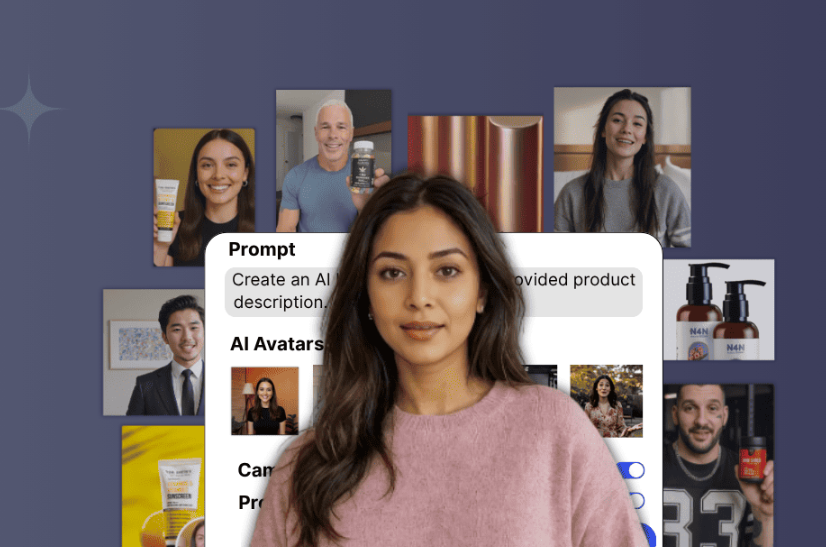
User-generated content has become an important part of digital marketing. People often trust content that feels natural and relatable more than polished advertisements. This has made UGC videos popular across social media, especially for brands that want to explain products in a more human way.
However, creating UGC content at scale is not always simple. A brand may need multiple concepts, scripts, variations, product demonstrations, and different formats for different platforms. This is where artificial intelligence is beginning to change the way UGC videos are planned and produced.
What Makes UGC Videos Different?
Traditional advertisements are usually created around a carefully controlled brand message. UGC content takes a different approach. It often looks more personal, conversational, and authentic.
A creator might speak directly to the camera, demonstrate a product, share an experience, or explain how a service solves a particular problem. The informal presentation can make the content feel closer to a recommendation from another person.
The challenge is that brands may need dozens of variations before finding the version that performs well. Creating each variation manually can take considerable time.
AI tools can help reduce some of this repetitive work.
See also: AI Customer Service: What Works and What Doesn’t in 2026
How AI Supports UGC Production
Artificial intelligence can assist with several stages of video production. It can help generate ideas, organize scripts, create visual concepts, edit footage, and produce different versions of existing content.
For example, a marketing team could start with one product idea and develop several hooks around it. One version might focus on a common customer problem, another might highlight a product benefit, while a third could use a testimonial-style approach.
AI can make this experimentation faster.
It can also help teams identify patterns in existing content. If certain openings, topics, or formats consistently receive better engagement, those patterns can influence future creative decisions.
AI UGC Video and Synthetic Content
One of the more interesting developments is the use of AI-generated or AI-assisted presenters.
Instead of recording every variation manually, businesses can experiment with realistic digital presenters, generated voices, and automated visual elements. This does not necessarily replace human creators. Instead, it gives marketing teams another option when they need to test concepts quickly.
The quality of synthetic content has also improved significantly. Realistic avatars can now deliver short scripts while maintaining natural-looking facial expressions and movements.
However, authenticity still matters. AI-generated content should be used carefully, especially when a brand is trying to build trust. Audiences can quickly lose interest when content feels overly artificial or repetitive.
Creating Multiple Creative Variations
One major advantage of AI is the ability to create variations.
Imagine that a company has one product and wants to test five different UGC concepts. Instead of producing one version and waiting for results, the team can prepare multiple creative directions.
They might test:
- A problem-solution video
- A product demonstration
- A customer testimonial
- A quick tutorial
- A before-and-after concept
The objective is not simply to produce more videos. It is to discover which message connects best with a particular audience.
AI Tools Can Simplify the Workflow
The production process can become even more efficient when idea generation, design, editing, and publishing are connected.
For example, tools such as Predis.ai can help marketers create an AI UGC video from a marketing concept while reducing the amount of repetitive creative work involved. This is especially useful when a team needs to test several social media creative ideas without starting every video from scratch.
The important point is that AI should support the creative process rather than remove human judgment from it.
Why Data Matters in UGC Creation
AI and data science work especially well together when content performance is measured consistently. Marketers can also use web scraping services to collect publicly available information about competitor content, audience trends, product feedback, and industry discussions. These insights can help brands identify new content opportunities and refine their UGC strategies.
A brand can track metrics such as:
- Watch time
- Completion rate
- Engagement
- Click-through rate
- Conversion rate
- Shares and saves
These numbers provide useful feedback.
For example, if viewers consistently leave a video during the first five seconds, the opening may need improvement. If a particular product demonstration generates more clicks, similar concepts could be tested again.
This creates a continuous feedback loop.
Create → Publish → Measure → Learn → Improve.
Personalization Can Improve Creative Testing
Different audiences respond to different messages. A new customer may want to understand what a product does, while an existing customer may be more interested in advanced features.
AI can help marketers organize audience data and create content variations around different customer needs.
This makes UGC campaigns more targeted instead of relying on one generic message for everyone.
The Human Element Still Matters
Despite the growth of AI, human creativity remains important.
A successful UGC video still needs a strong idea, believable communication, and an understanding of the audience. AI can help with production and experimentation, but it cannot automatically understand every cultural reference, emotional nuance, or brand personality.
The best approach is often a combination of human creativity and AI-assisted production.
The Future of AI-Assisted UGC
UGC creation is likely to become increasingly data-driven. Instead of producing content based only on intuition, marketers can use performance information to decide what to create next.
AI can make the process faster by helping with ideation, scripting, editing, personalization, and creative variations.
For creators and brands, this means less time spent on repetitive production and more time available for strategy and experimentation.
The future of UGC is not necessarily about choosing between humans and AI. It is about finding the right balance between authentic human communication and intelligent technology.
As AI continues to develop, creators who understand both sides will be better positioned to produce content that is efficient, relevant, and genuinely useful to their audiences.
