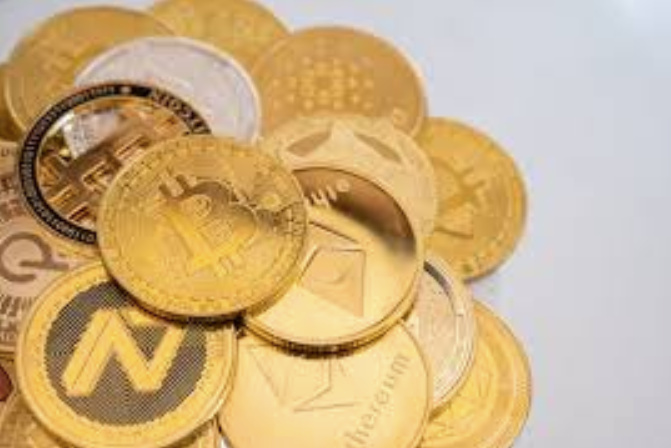
Since Bitcoin established value transfer, altcoins shifted toward specialized ecosystems and governance-driven models. Early forks seeded iterative improvements, while modern tokens target use cases, tokenized assets, and layered security. Progress depends on scalable governance, risk discipline, and interoperable designs that balance throughput with decentralization. As development cycles compress, benchmarking and verification grow critical. Cross-chain liquidity and diversified collateral expand resilience, hinting at real-world deployments beyond Bitcoin’s original scope—an evolving landscape that warrants continued scrutiny.
What Altcoins Add Beyond Bitcoin
Altcoins extend Bitcoin’s framework by addressing specific limitations and enabling new capabilities beyond simple value transfer.
They introduce distinct governance models, tokenized assets, and specialized protocols, shaping strategic deployment.
Fragmented governance emerges as a design consideration, influencing consensus and adaptability.
Tokenized assets expand collateral and liquidity possibilities, while protocol security becomes a layered discipline.
Scaling tradeoffs must be managed to balance performance, decentralization, and innovation.
From Forks to Focus: The Evolution of Use Cases
The evolution of use cases in altcoins proceeds from iterative forks to targeted applications, tracing how experimental governance, token economics, and protocol specialization refine utility beyond mere settlement.
In this trajectory, fork dynamics shape testing grounds and risk tolerance, while governance experiments reveal performance under pressure.
Strategic alignment of incentives accelerates adoption, clarifying pathways for scalable, purposeful networks.
Tech Leaps That Shaped Altcoin Maturity
Tech leaps have redefined altcoin maturity by compressing development cycles, elevating security guarantees, and enabling scalable governance models that couple consensus innovation with real-world deployment.
They benchmark modular architectures, formal verification, and incentive-aligned upgrades.
This progress reinforces blockchain governance, aligns token sustainability with long-term viability, and accelerates cross-chain interoperability, ensuring resilient ecosystems that withstand shocks while supporting strategic, freedom-respecting experimentation and disciplined risk management.
Evaluating Altcoins Today: Risks, Rewards, and Real-World Adoption
Assessing altcoins today requires a disciplined framework that balances risk and opportunity across governance, security, and real-world utility. The evaluation hinges on disciplined risk assessment, transparent tokenomics, and resilient security postures amid evolving market dynamics. Strategic adopters scrutinize use-case traction, interoperability, and regulatory clarity, translating technical merit into durable value. Informed judgment acknowledges volatility while revealing practical paths to scalable, freedom-aligned adoption.
Frequently Asked Questions
How Do Altcoins Handle Regulatory Compliance Over Time?
Regulatory innovation shapes compliance evolution, with altcoins adapting through onboarding KYC/AML modules, on-chain audits, and governance-driven disclosures. The approach remains strategic: balancing transparency and privacy while sustaining decentralized principles and investor freedom within evolving jurisdictional frameworks.
Which Altcoins Offer the Best On-Chain Governance Models?
Among altcoins, Cardano and Tezos offer robust on-chain governance models, with on-chain voting and formal upgrade processes, paralleling Bitcoin governance concepts while enabling strategic funding mechanisms; these networks embody freedom-friendly governance, though liquidity and complexity remain considerations.
What Are the Hidden Costs of Altcoin Staking Rewards?
Hidden costs of altcoin staking rewards arise from volatility, lockup periods, and inflation drag, eroding real yield. Regulatory compliance burdens loom, while on-chain governance benefits complicate risk. Stakeholders weigh liquidity, opportunity costs, and strategic freedom with caution.
Can Altcoin Ecosystems Sustain Long-Term Decentralization?
Alternative incentives strain governance dynamics and staking economics, raising decentralization tradeoffs; regulatory evolution and financial integration influence network security and ecosystem resilience, while sustainability hinges on governance adaptability and sustainability of staking economics amid evolving market incentives.
See also: API Monetization Models
How Have Altcoins Impacted Traditional Financial Systems?
Altcoins have reshaped traditional finance by challenging settlement pipelines, driving faster cross-border transfers, and pressuring banks to rethink liquidity. Impact on bank settlements prompts sharper privacy vs compliance debates for users seeking freedom within regulated ecosystems.
Conclusion
In summation, altcoins have evolved from Bitcoin’s forks into purpose-built ecosystems that target governance, asset tokenization, and scalable security. Their trajectory reflects disciplined risk management, interoperable designs, and formal verification to boost reliability and resilience. Cross-chain compatibility and diversified collateral broaden liquidity and deployment potential. Like a chess grandmaster diversifying pieces, the space strategicizes beyond mere value transfer, pursuing real-world utility while navigating trade-offs between performance and decentralization.
